
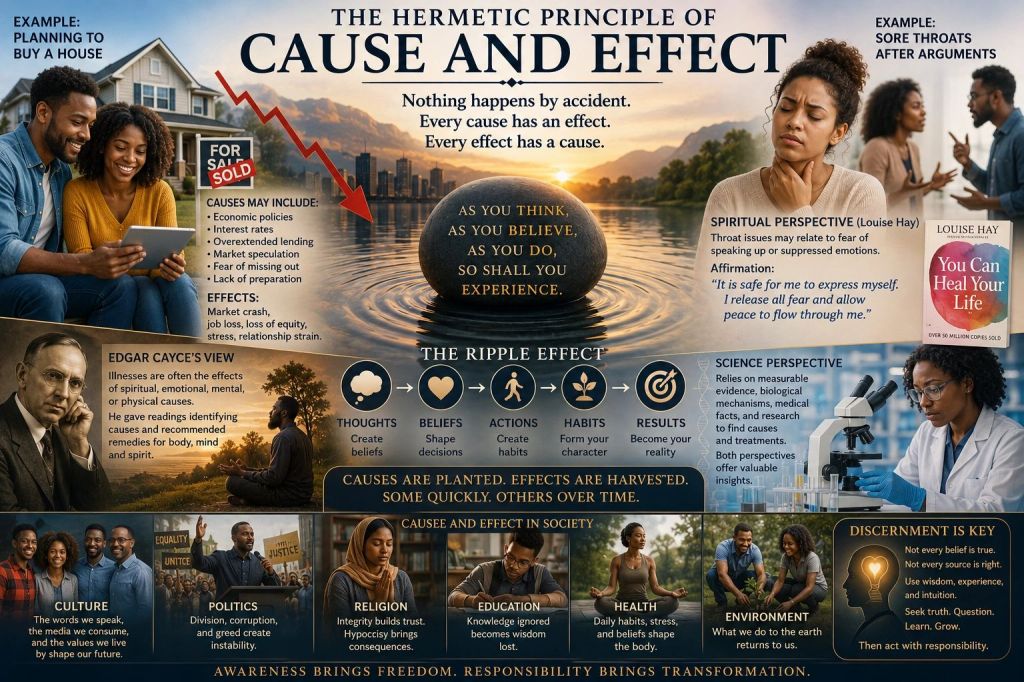
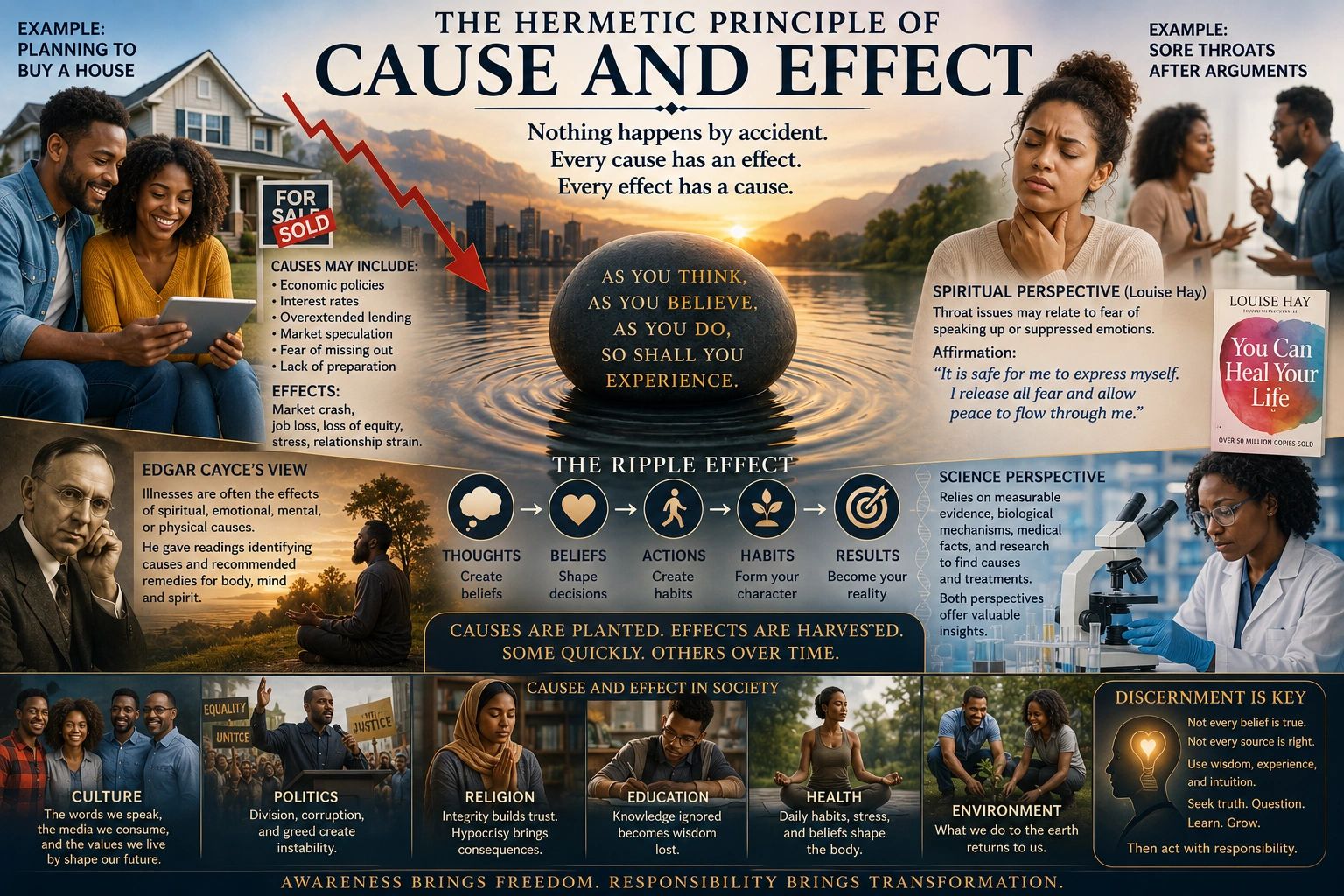
The Hermetic Principle of Cause and Effect is one of the seven teachings associated with the ancient text known as the Kybalion. The principle is simple: Nothing happens by accident. Every effect has a cause, and every cause creates an effect. At first glance, this sounds obvious. If you touch fire, you get burned. If you work hard, you often improve your situation. But the deeper meaning of this principle goes far beyond physical action. It asks a difficult question: What unseen causes are shaping the events, relationships, illnesses, and struggles in our lives?
This principle matters today because modern society often focuses only on visible effects while ignoring deeper causes. We see economic crashes, political division, chronic illness, anxiety, broken relationships, and spiritual confusion. Most people react to the effect without asking what produced it. Hermetic teachings encourage people to think differently.
Cause and Effect in Today’s Culture,
Modern culture runs on reaction. Social media rewards outrage. News cycles feed fear. Politics often becomes emotional theater instead of thoughtful discussion. One angry post creates thousands of responses. One rumor spreads panic. One political lie creates years of distrust. Cause and effect moves fast now. People sometimes believe their words, thoughts, or actions disappear once spoken online. They do not. They ripple outward. A careless statement can damage a friendship, career, or reputation years later.
The same principle works positively. Encouragement creates confidence. Honesty builds trust. Discipline creates stability over time. Many effects people complain about today were set in motion long ago by repeated causes.
Imagine a young couple planning to buy their first home. They save money for years. Interest rates look manageable. The market appears strong. Then suddenly the housing market crashes. Property values drop. One spouse loses a job. Stress enters the relationship. Most people only see the effect: “We bought at the wrong time.” But cause and effect ask deeper questions. What economic decisions led to the crash? What banking policies encouraged unstable lending? Did emotional pressure push people into homes they could not afford? Did fear of missing out override wisdom and patience?
On a personal level, cause and effect also appears in emotional reactions. One couple may face the crisis calmly and work together. Another may collapse into blame and resentment. The external event is the same. The internal causes are different. Beliefs, preparation, emotional maturity, and discernment all shape the outcome.
Mental, Emotional and Physical Cause and Effect
Now consider another example. A woman repeatedly develops sore throats after intense arguments with her fiancé. Medical tests may show inflammation, stress responses, or lowered immunity. Science explains the physical mechanisms through hormones, stress chemistry, and immune function. That explanation is important and valid. But some spiritual teachers would ask another question: Is the body expressing something emotionally suppressed?
You Can Heal Your Life by Louise Hay became widely known for proposing that thought patterns and emotional conflicts can contribute to illness. Hay associated throat problems with fear of speaking honestly or suppressed anger. She recommended positive affirmations to help shift emotional patterns. One affirmation she suggested for throat issues was: “It is safe for me to express myself. I release all fear and allow peace to flow through me.”
Many people found comfort and emotional healing through her ideas. Others criticized her approach for oversimplifying disease or implying blame for illness. This is where discernment becomes important. Science generally relies on measurable evidence, biological mechanisms, clinical trials, and reproducible data. Medical professionals look for signs of bacterial or viral infection, inflammation, or physical stress responses. Spiritual perspectives may examine emotional trauma, subconscious beliefs, unresolved conflict, or energetic imbalances. These viewpoints often collide because they begin with different assumptions about cause.
One side asks: “What physically caused the disease?”
The other asks: “What deeper pattern may have contributed to the condition?”
Some people reject all spiritual ideas and trust only material evidence. Others reject science entirely and interpret everything spiritually. Both extremes can become dangerous. Wisdom often requires balance. Science offers valuable facts about the physical world. Spiritual traditions explore meaning, consciousness, morality, and the unseen dimensions of human experience. Cause and effect may operate through both visible and invisible forces.
Political and Religious Cause and Effect
Cause and effect also appears in political and religious life. A nation that constantly feeds division eventually experiences distrust and instability. A religious institution that hides corruption eventually loses credibility. A society that abandons moral responsibility often experiences confusion about identity, purpose, and truth. These effects rarely appear overnight. Causes build slowly over the years.
The Hermetic teaching reminds people that effects are often delayed. A person may plant seeds today and not see results for months or years. That applies personally as well. Daily habits shape future health. Repeated thoughts shape emotional patterns. Small compromises shape character. Consistent honesty builds trust over time.
One of the hardest parts of the Principle of Cause and Effect is accepting responsibility. People naturally prefer to blame outside forces for painful effects while ignoring the causes they helped create. That does not mean every tragedy is personally deserved or spiritually earned. Life includes randomness, accidents, injustice, and circumstances beyond human control. Still, the principle encourages self-examination instead of constant reaction. What patterns keep repeating in your life? What beliefs are shaping your decisions? What emotional habits are producing the same outcomes again and again? Discernment matters because not every spiritual claim is true, and not every scientific conclusion explains the whole picture.
The Hermetic Principle of Cause and Effect remains relevant because it challenges people to think beyond surface appearances. Every choice matters. Every thought influences direction. Every action creates consequences somewhere. Some causes are obvious. Others stay hidden for years. The principle does not demand fear. It calls for awareness. What you repeatedly think, say, believe, tolerate, and pursue shapes the effects that eventually appear in your life.

