
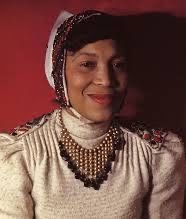
Black History Month Tribute
When people speak about African diasporic spirituality in serious, documented terms, Zora Neale Hurston must be named. Hurston did not approach Vodou and hoodoo as curiosities or folklore. She approached them as living spiritual systems, practiced by real communities, with structure, theology, and history.
At a time when Black spiritual traditions were ridiculed, sensationalized, or erased, Hurston preserved them through rigorous fieldwork and firsthand participation. Her work remains foundational because she recorded what practitioners actually believed and practiced, not what outsiders imagined.
Vodou Is a Religion, Not a Horror Trope
Vodou is a religion, not superstition, not magic tricks, and not what Hollywood portrays. It originated in Haiti, formed from West and Central African spiritual systems, particularly those of the Fon, Yoruba, and Kongo peoples, combined with elements of Catholicism during enslavement.
Vodou centers on:
- A supreme creator, Bondye
- Intermediary spirits known as the lwa
- Ancestor veneration
- Ritual, song, drumming, healing, and moral responsibility to the community
Hollywood transformed Vodou into something it is not by associating it with zombies, curses, and mind control. These distortions emerged from U.S. occupation narratives, racist travel writing, and early twentieth-century pulp fiction. Hurston directly challenged these lies by documenting ceremonies, initiations, and spiritual ethics as they existed in Haitian communities.
Hoodoo and the African American Spiritual Continuum
Hurston also documented hoodoo, which is not the same as Vodou. Hoodoo is an African American spiritual practice rooted in African cosmology, Indigenous plant knowledge, and lived experience under enslavement in the American South.
Hoodoo emphasizes:
- Herbal knowledge
- Psalms and spoken prayer
- Rootwork and protection practices
- Direct relationship with the spirit and ancestors
Hurston treated hoodoo as a legitimate system of knowledge, passed orally and through practice, not as superstition. She learned directly from practitioners and recorded methods with care and respect, something few researchers were allowed to do.
Her Training Under Franz Boas
Hurston studied anthropology under Franz Boas, the founder of modern American anthropology. Boas rejected the idea that cultures could be ranked as primitive or advanced. He insisted on cultural relativism, the principle that cultures must be understood on their own terms. This training mattered. It meant Hurston approached African diasporic religions as complete systems, not as failed versions of European religion. Boas encouraged fieldwork, linguistic precision, and respect for indigenous knowledge. Hurston applied all three in her spiritual research.
Why Her Work Still Matters
Hurston’s work stands as:
- A correction to racist misrepresentation
- A record of spiritual systems that survived enslavement
- Proof that African diasporic religions are structured, ethical, and theologically complex
She did not translate these traditions into something more palatable for outsiders. She preserved them as they were. Honoring Zora Neale Hurston during Black History Month means telling the truth about African diasporic spirituality. It means acknowledging that Vodou and hoodoo are not shadows of religion. They are religion. They are philosophy. They are living knowledge systems that endured despite systematic attempts to erase them.
References and Suggested Reading:
- Hurston, Tell My Horse
- Hurston, Mules and Men
- Fandrich, The Mysterious Voodoo Queen
- Library of Congress, Hurston manuscripts

