
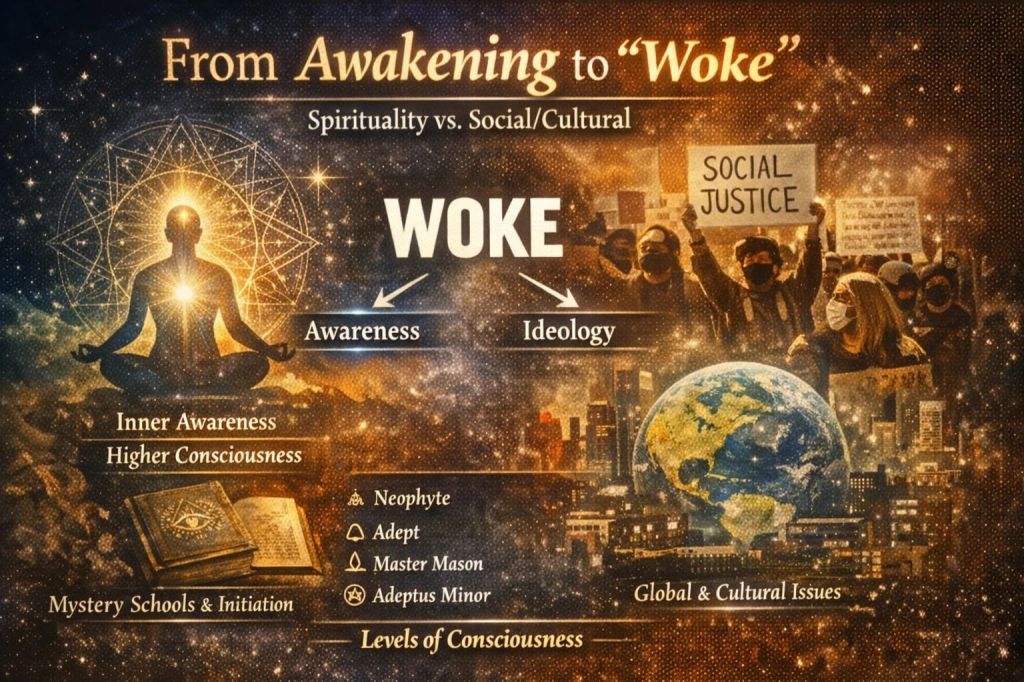
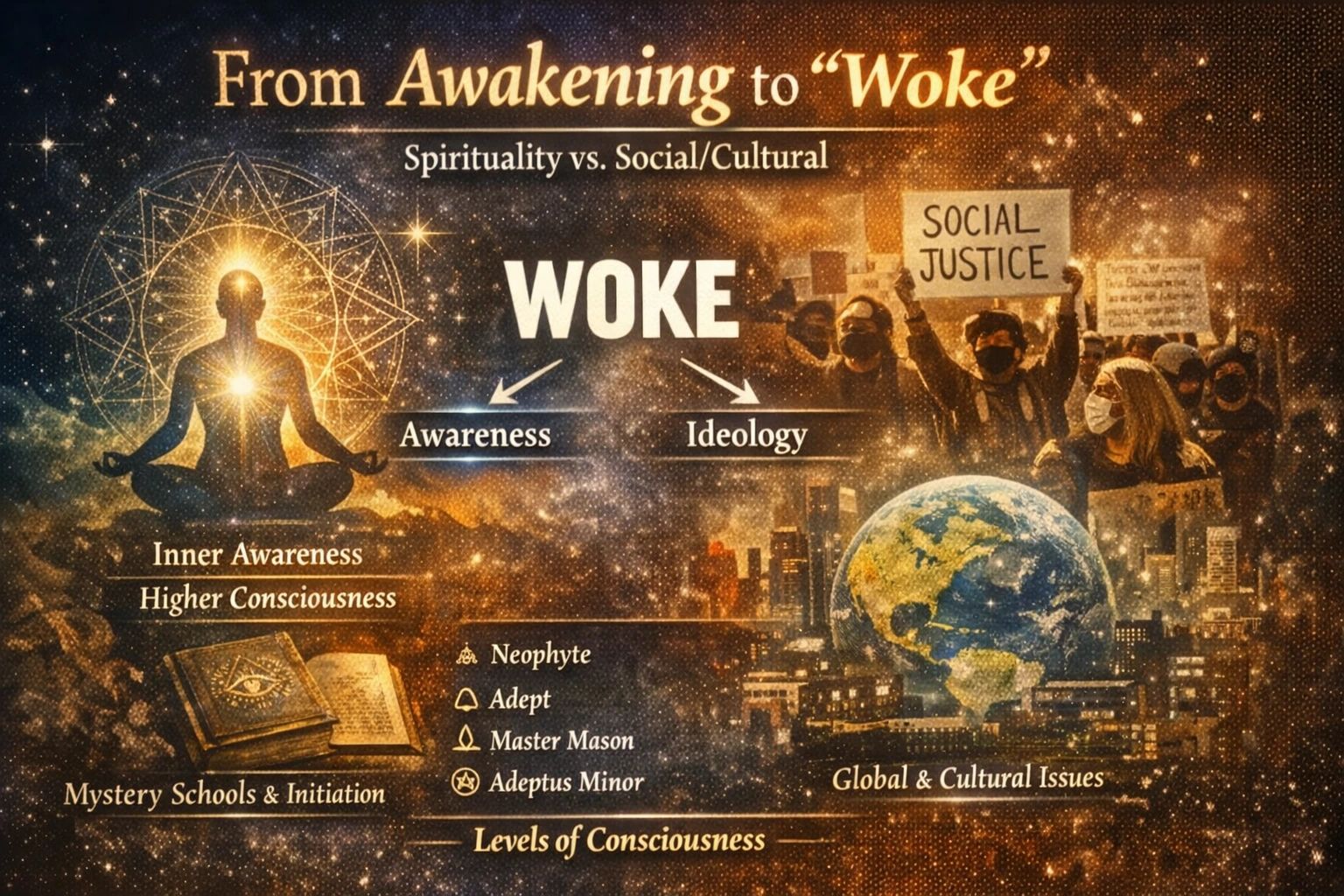
Language evolves alongside human awareness. Words that begin in one domain often migrate, reshape, and take on new meanings as culture changes. The word “woke” is a clear example of this process. Its current use in social and political contexts can feel far removed from its deeper roots in spirituality, yet the connection remains if you trace it carefully.
Awakening: The Original Context
In spiritual traditions across cultures, the idea of “awakening” has long been used to describe a shift in consciousness. It refers to becoming aware of reality beyond surface appearances. This awareness can involve recognizing patterns of thought, questioning identity, or perceiving a deeper unity in existence. In Buddhism, awakening points toward enlightenment, an understanding of suffering and its cessation. In Western esoteric traditions, awakening often refers to becoming conscious of hidden laws governing the self and the universe. In both cases, the emphasis is inward. It is about perception, clarity, and transformation of consciousness.
The Shift to “Woke”
The term “woke” emerged in African American Vernacular English in the early twentieth century. It originally meant staying alert to injustice, particularly racial injustice. Over time, especially through social media, it expanded into a broader cultural label. Today, “woke” in social and cultural contexts often refers to awareness of systemic inequality, identity politics, and social justice issues. In geopolitical discussions, it can carry multiple interpretations depending on who uses it:
- Supporters use it to describe attentiveness to injustice and inequality.
- Critics use it to describe perceived ideological rigidity or performative activism.
Because of this divergence, the term has become contested. Its meaning shifts depending on political perspective, media framing, and cultural context.
Spiritual Awakening vs Cultural “Woke”
It helps to separate these meanings clearly.
In spirituality:
- Awakening is inward.
- It concerns perception, awareness, and consciousness.
- It unfolds gradually and often quietly.
- It is not dependent on external validation.
In social and cultural usage:
- “Woke” is outward-facing.
- It concerns awareness of societal structures and issues.
- It is often expressed publicly.
- It can be shaped by group identity and discourse.
These are not mutually exclusive, but they operate on different levels. The evolution from “awakening” to “woke” reflects a broader pattern. As consciousness shifts collectively, language adapts to express new concerns and priorities. At the same time, words can lose precision as they spread across contexts. A term that once pointed to inner transformation can become a label in public discourse. This does not invalidate its original meaning, but it does require careful distinction. If you look closely, both uses of the word point to awareness. The difference lies in direction. One turns inward. The other turns outward.
Language will continue to evolve as human awareness changes. Words like “awakening” and “woke” are snapshots of that process. They show how ideas move from inner experience to public conversation, and sometimes become fragmented along the way. If you want clarity, return to the root concept. Awakening is not a label. It is a process. It unfolds in layers, shaped by your attention, your experience, and your willingness to see beyond what you once accepted as complete.
The word may change. The process does not.

