
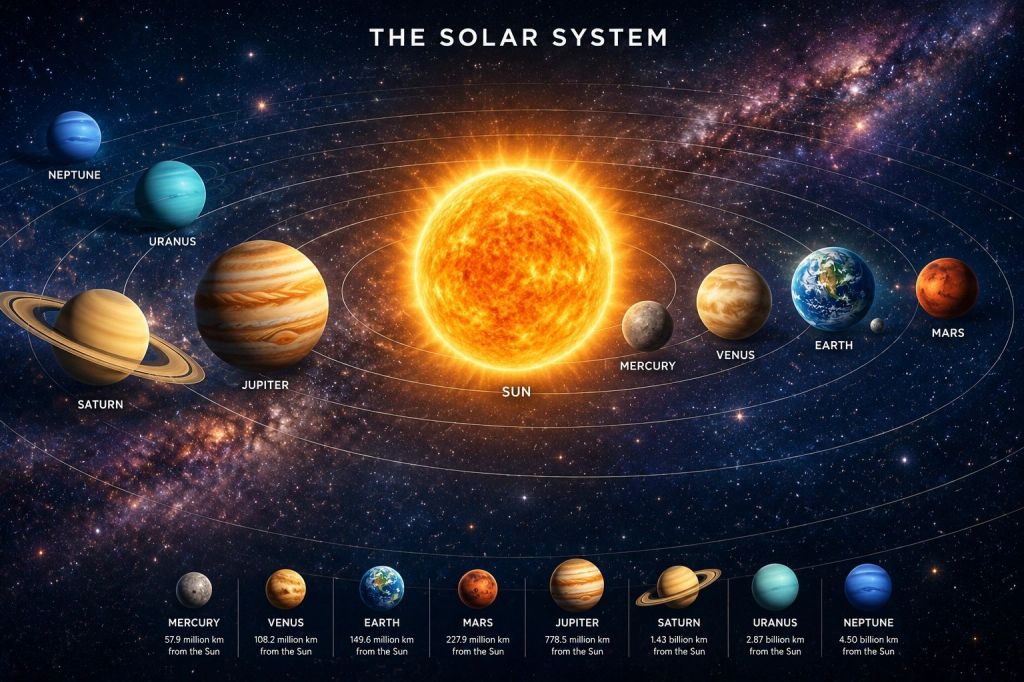
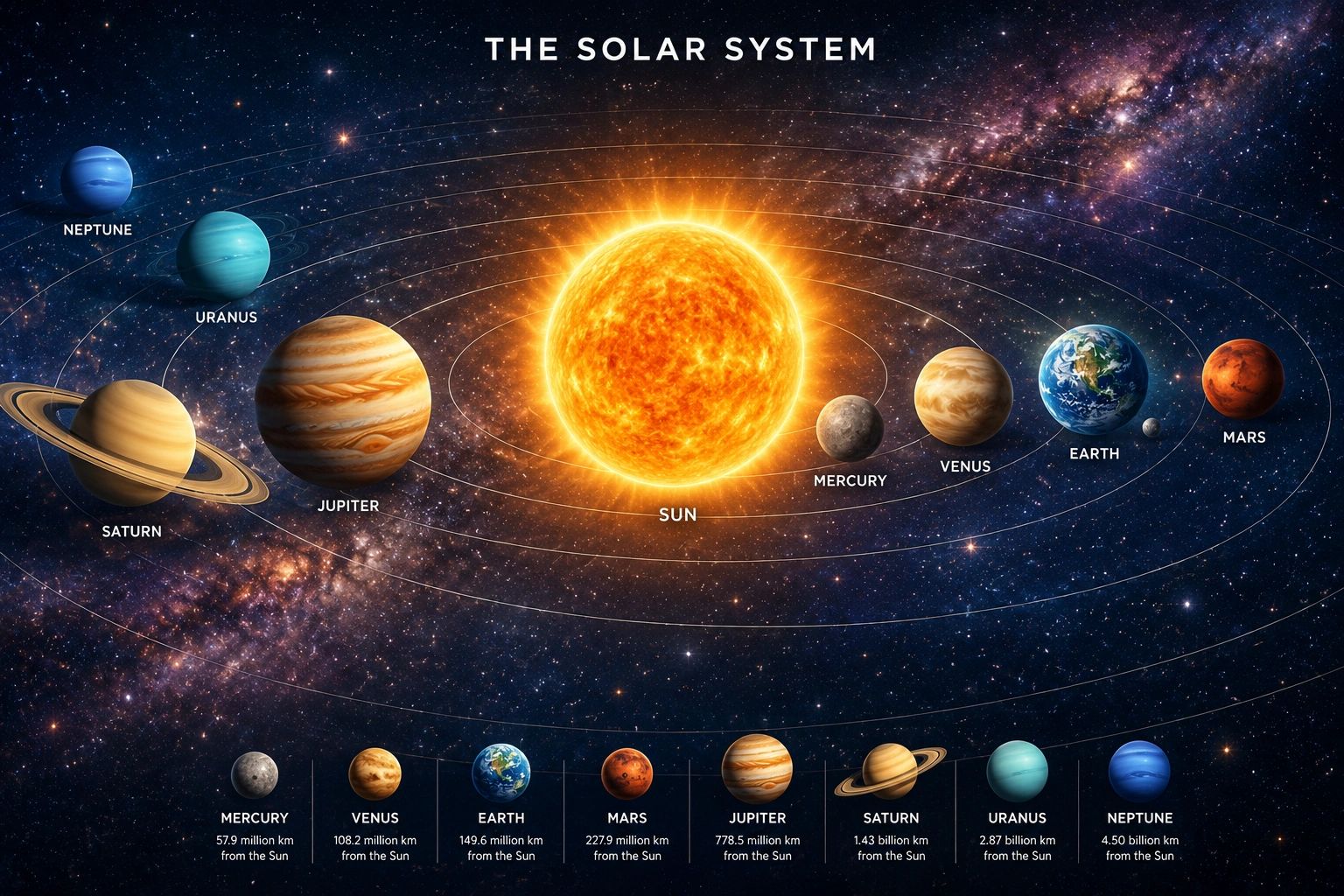
The other day, I was watching a video featuring astrophysicist Neil deGrasse Tyson. At one point, he started talking about Mercury retrograde. His point was simple. Mercury isn’t actually moving backward. The whole idea of Mercury retrograde, at least as many people understand it, is based on an illusion.
That caught my attention.
Like a lot of people, I had heard about Mercury retrograde for years. Every few months my social media feeds would fill with warnings about communication problems, technology failures, travel delays, and relationship drama. I had accepted it without ever really asking where the idea came from.
I decided to fact-check Tyson. It turns out Tyson was right. Mercury never reverses its orbit around the Sun. Neither does any other planet in our solar system. What astronomers call “retrograde motion” is simply an apparent backward movement when viewed from Earth.
Here’s a simple way to picture it.
Imagine you’re driving down the highway. You pass a slower car in the next lane. For a brief moment, it looks like the slower car is moving backward compared to you, even though it’s still moving forward. The same thing happens with Mercury.
Mercury travels around the Sun much faster than Earth. As the two planets move through space at different speeds, there are times when Mercury appears to reverse direction against the background of the stars. It only looks that way because of our changing point of view.
NASA explains that retrograde motion is an effect of the planets orbiting the Sun at different speeds. Mercury never actually stops or turns around. It only appears to do so from Earth.
From a scientific standpoint, Mercury retrograde is real only as an optical illusion. It is not a planet physically moving backward.
Where Did the Astrology Come From?
If science explains Mercury retrograde as an illusion, why has it become such a powerful idea in astrology? The answer goes back thousands of years. Long before telescopes existed, ancient civilizations carefully observed the night sky. They noticed that planets usually moved in one direction across the stars, but occasionally appeared to stop and move backward. Since they didn’t know about heliocentric astronomy, these unusual movements seemed significant.
Astrologers assigned symbolic meanings to the planets based on what they represented in human life. Mercury became associated with communication, learning, commerce, travel, and thinking. When Mercury appeared to move backward, astrologers interpreted it as a period when those parts of life might also become more difficult or require reflection.
Modern astrology still follows that tradition. During Mercury retrograde, many astrologers recommend slowing down, reviewing decisions, double-checking travel plans, and anticipating communication mishaps. These ideas are symbolic beliefs rather than conclusions supported by scientific evidence.
Why Did Mercury Retrograde Become So Popular?
Mercury retrograde has existed in astrology for centuries, but it didn’t become part of mainstream culture until much more recently. Researchers who study the history of astrology have found that discussions of Mercury retrograde grew significantly in the United States during the 1960s. Interest expanded even more during the 1980s, when astrologers revived older techniques and personal computers became common. Ironically, every computer crash or lost file seemed to reinforce the belief that Mercury retrograde caused technological problems.
Then social media arrived.
Today, every Mercury retrograde brings thousands of posts explaining why your phone crashed, your flight was delayed, or your ex suddenly texted you. The phrase has become part of popular culture, even among people who don’t actively follow astrology.
For years, I honestly didn’t pay much attention to Mercury retrograde. I never connected anything happening in my life to it. Then something changed. A friend began reminding me every time Mercury went retrograde. She would tell me what to expect and what to watch out for. Before long, I found myself paying attention.
A difficult conversation?
Mercury retrograde.
Computer problems?
Mercury retrograde.
Plans falling apart?
Mercury retrograde.
It became an easy explanation for almost everything that went wrong.
Looking back, I realize something. The more I believed Mercury retrograde was responsible, the less responsibility I took for my own choices.
That’s one reason I think that Neil deGrasse Tyson video showed up when it did. I was already beginning to question whether I had given Mercury retrograde too much power over my thinking. The more I researched, the more I realized there are two very different ways to look at Mercury retrograde.
Science says the planet only appears to move backward because of orbital geometry. There is no evidence that its position influences our relationships, technology, or daily decisions.
Astrology sees Mercury retrograde as a symbolic period for reflection, communication, and caution. That belief comes from centuries of astrological tradition rather than scientific testing.
After weighing both explanations, I know where I stand. I’ve decided to stop blaming difficult seasons on planets that aren’t actually reversing direction. Life is complicated enough without handing over responsibility to the sky.
That doesn’t mean I can’t appreciate astronomy or understand why astrology resonates with so many people. It simply means that for me, growth begins with owning my decisions rather than looking for cosmic excuses.
How about you?
When something goes wrong, do you look to Mercury retrograde?
Or do you look inward and ask what you can learn, change, or do differently?

