
The Spiritual Churches and Mediums of Harlem
If Harlem’s spiritual underground had a heartbeat, it was found in the storefront churches, healing circles, Spiritualist congregations, and metaphysical gatherings that became woven into daily life during the 1920s and 1930s.
Many people arrived in Harlem carrying more than suitcases. They brought memories, traditions, beliefs, and spiritual practices from the American South, the Caribbean, and beyond. The Great Migration uprooted millions of African Americans from familiar communities and placed them in a rapidly changing urban environment. Along with opportunities came uncertainty, overcrowded housing, racial discrimination, financial hardship, and the emotional strain of starting over.
Traditional churches remained important, but many residents sought spiritual support beyond conventional religious institutions. Across Harlem, storefront churches, Spiritualist centers, and independent religious groups offered healing, guidance, prophecy, and a sense of community. These gatherings attracted people looking for answers to everyday concerns, from illness and employment to relationships and grief.
Unlike many mainstream denominations, Spiritualist churches often encouraged direct personal experiences with the sacred. Worship services might include prayer, music, healing rituals, messages from spirit guides, prophetic visions, or communication with departed loved ones. Christianity frequently blended with African diasporic traditions, creating forms of worship that reflected the diverse backgrounds of Harlem’s residents.
Women played especially important roles within these communities. At a time when leadership opportunities were often limited elsewhere, many Spiritualist churches recognized women as mediums, healers, prophets, counselors, and founders. Their influence extended beyond religious services. They became trusted advisors who helped individuals navigate both spiritual and practical challenges.
One of Harlem’s best-known spiritual advisers was Madame Fu Futtam. Newspapers of the period described her as a fortune teller, dream interpreter, and spiritual consultant who attracted clients from across New York. While some viewed such figures with skepticism, others sought their guidance with complete sincerity. Her popularity reflected a broader reality of Harlem life: many people were willing to explore spiritual paths that existed outside traditional religious boundaries.
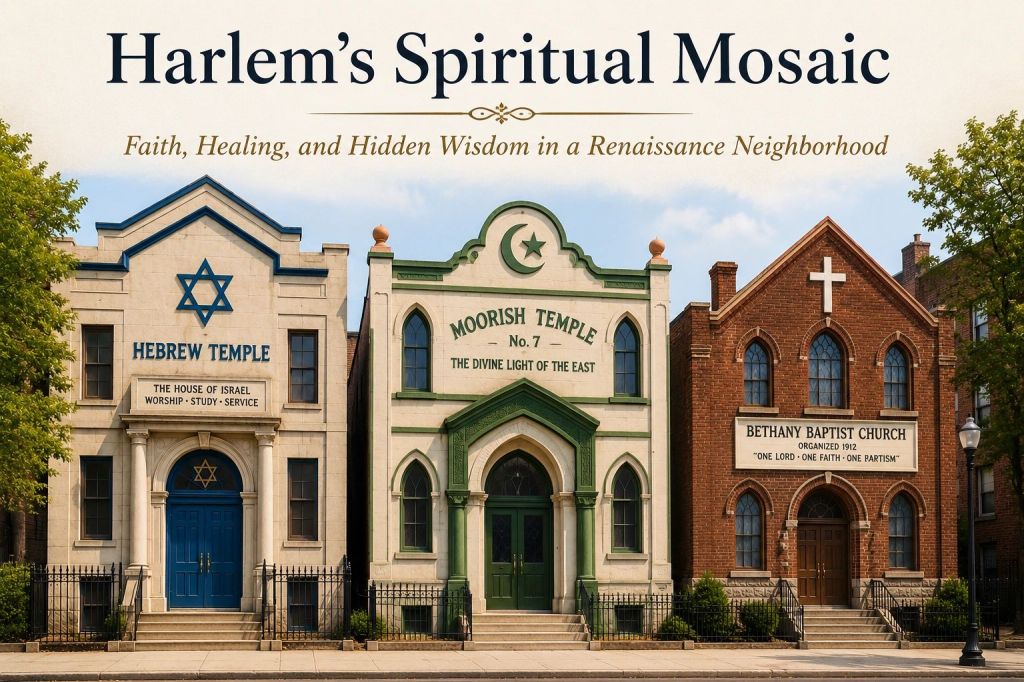
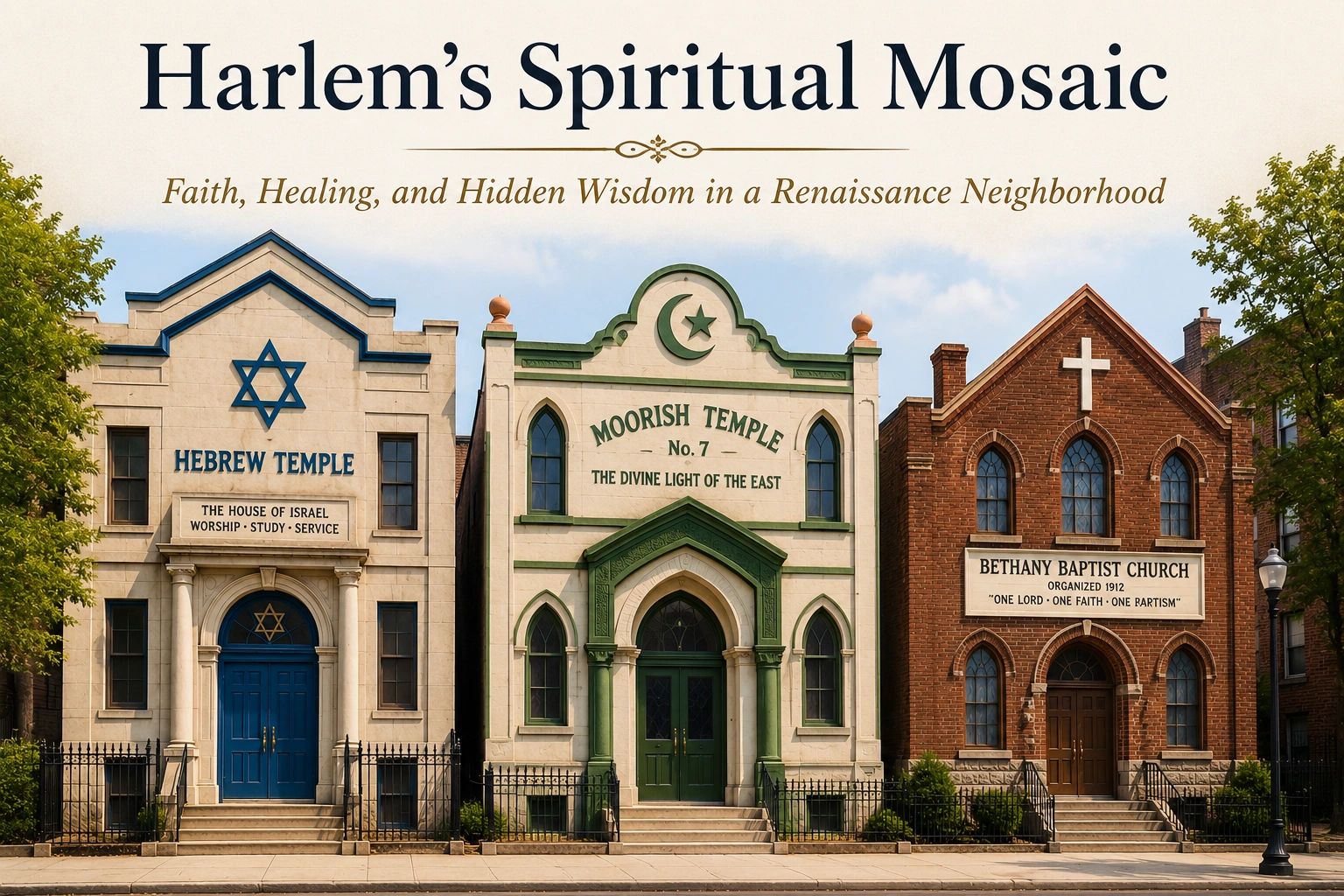
What made Harlem unique was the extraordinary variety of spiritual traditions that existed side by side. Spiritualist churches encouraged communication with the spirit world. New Thought groups emphasized the power of consciousness and mental transformation. Moorish Science offered an alternative understanding of identity, history, and spirituality. Rosicrucian and metaphysical study groups explored ancient wisdom traditions, symbolism, and esoteric philosophy.
These communities shared more than neighborhood boundaries. They contributed to a broader spiritual culture that emphasized the relationship between mind, body, and spirit. A Spiritualist church might share the same block with a Baptist congregation, a Moorish Science meeting hall, a New Thought study group, or a Rosicrucian lecture circle. Ideas moved freely between communities, creating a spiritual landscape unlike any other in the country.
Here are a few of the institutions that flourished throughout Harlem during this era. The Commandment Keepers Ethiopian Hebrew Congregation, founded by Wentworth Arthur Matthew, became one of the most influential Black Hebrew congregations in the neighborhood. Arnold Josiah Ford established Beth B’nai Abraham on 135th Street, blending elements of Judaism, Pan-African thought, and cultural pride. The Moorish Zionist Temple, founded by Mordecai Herman, offered another expression of Harlem’s evolving spiritual identity. By the 1930s, Father Divine’s Peace Mission and the Moorish Science Temple’s congregations had also become part of Harlem’s expanding religious landscape.
This atmosphere of experimentation and exchange helped shape a generation of seekers in search of healing, identity, dignity, and a deeper understanding of themselves and their place in the world.
In the next installment, we will explore how New Thought philosophy, Rosicrucian teachings, and other metaphysical movements gained a foothold in Harlem and influenced some of the era’s most intriguing spiritual figures.
References:
Albanese, Catherine L. A Republic of Mind and Spirit: A Cultural History of American Metaphysical Religion. Yale University Press, 2007.
Harris, LaShawn. Sex Workers, Psychics, and Numbers Runners: Black Women in New York City’s Underground Economy. University of Illinois Press, 2016.
Weisenfeld, Judith. New World A-Coming: Black Religion and Racial Identity during the Great Migration. New York University Press, 2017.

